
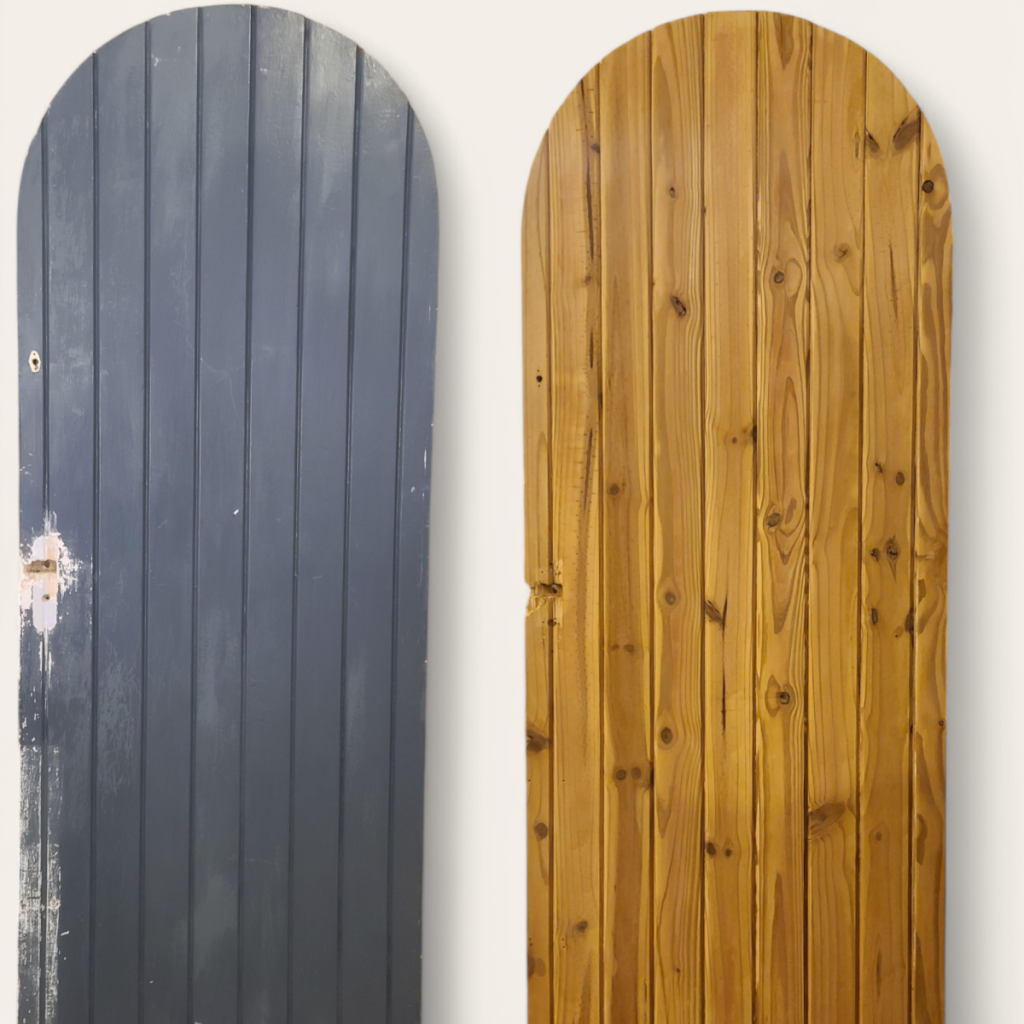
So you’ve had your door stripped and now it’s sitting there looking beautiful – bare wood, all that grain showing through, ready for finishing. This is the bit people ask us about more than anything else. What do you put on it? Which finish is best?
We strip a lot of doors across Manchester, Liverpool, Preston and the rest of the North West, and most customers go for hard wax oil these days. But it’s not the only option and depending on your door and where it is, something else might suit you better. Here’s a straightforward guide to the main choices.
Why You Need to Finish a Stripped Door
Bare wood won’t stay looking nice on its own. It’ll absorb moisture, get marked easily, and over time start to look grubby and tired. A good finish protects the wood and brings out the grain properly – you won’t get the full effect of the stripping until you’ve got some oil or wax into it.
The good news is that finishing a stripped door isn’t a massive job. For most people it takes a couple of hours spread across a day to allow coats to dry in between.
Hard Wax Oil – The Most Popular Choice
If you ask us what to use, most of the time we’ll say hard wax oil. Brands like Osmo Polyx or Fiddes Hard Wax Oil are what a lot of our customers end up using, and they consistently get great results.
Hard wax oil does exactly what the name suggests – it’s a combination of oil and wax that soaks into the wood and hardens. It’s not a surface coating like varnish, so it won’t crack or peel. If it gets scuffed you can just reapply to that area rather than sanding the whole thing back.
Application is simple. Wipe it on with a cloth or a flat brush, leave it to soak in for around ten to fifteen minutes, then buff off any excess. Two thin coats is usually enough. Leave it to cure properly for a couple of days before hanging the door back up and you’re done.
Danish Oil and Linseed Oil
Danish oil is another solid option that’s been around for a long time. It soaks into the wood well and gives a nice natural finish. It takes longer to cure than hard wax oil and you’ll usually need three or four coats, but it’s cheaper and easy to find in any hardware shop.
Raw linseed oil is the traditional choice for old pine doors. It takes a long time to dry and the finish isn’t quite as tough as modern alternatives, but some people prefer it for period properties where they want to keep things as original as possible.
Wax
Wax on its own – something like Briwax or beeswax – gives a softer sheen and a more traditional look. It’s popular for interior furniture and panelling. The downside is that it needs more maintenance than oil because it doesn’t harden the same way. Good for a sideboard or a chest of drawers, but for a front door or a heavily used interior door, we’d steer you toward something tougher.
Varnish – When to Use It
Varnish isn’t used as much as it once was, but there are situations where it makes sense. If the door is going to be in a very damp or high-traffic area, a good quality floor varnish can offer more protection than oil. The downside is that when it eventually wears it tends to look worse – you get flaking and peeling rather than just a dull patch that needs a top-up coat.
For exterior doors, some customers go for a yacht varnish which is very durable. But hard wax oil has improved a lot in recent years and there are versions specifically rated for exterior use, so it’s worth considering those first.
What We Recommend for Different Situations
Interior doors and furniture: hard wax oil or Danish oil. Two to three coats, sand lightly between coats with a fine-grit paper if you want a really smooth result.
Exterior doors: an exterior-rated hard wax oil or a good quality exterior oil. You’ll want to do a top-up coat every year or two depending on how exposed the door is, but it’s a quick job once you’ve done it the first time.
Period furniture and panelling: wax or a tinted oil if you want to add a bit of warmth to the colour without changing it dramatically.
Need Your Door Stripped First?
If you’ve got a door or a piece of furniture that still needs stripping before you can get to the finishing stage, that’s where we come in. We cover Manchester, Liverpool, Preston, Blackpool and the surrounding areas. Our dip tank gets every bit of paint off, including the mouldings and detail work – much better results than doing it by hand.
Give us a call on 07375 369191 or drop us an email at info@northwestdoorstripping.co.uk and we’ll get you sorted.


